
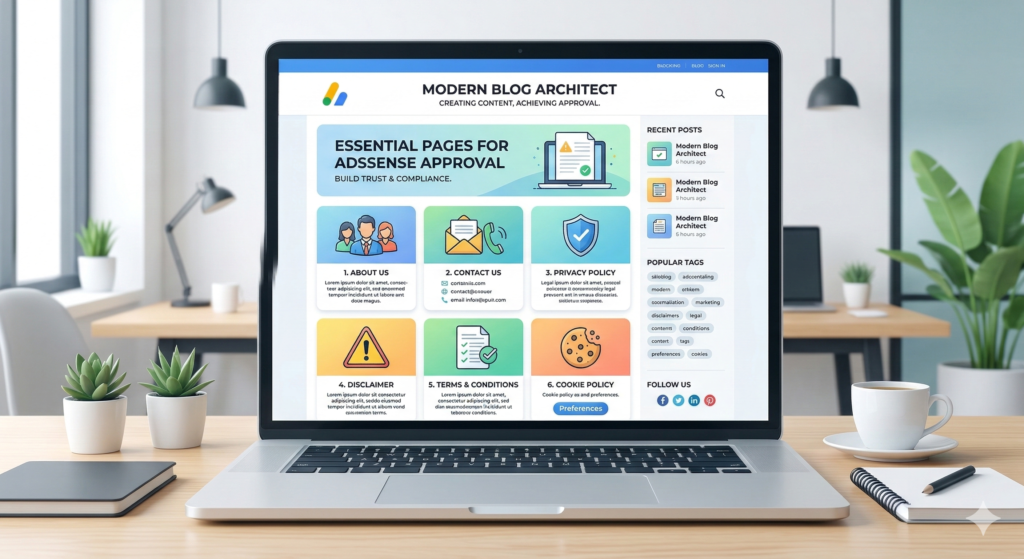
Hello! In this article, you will learn about the 6 Legal Pages for AdSense Approval that every website must have to become fully AdSense ready.



Getting approved for Google AdSense requires more than just publishing quality content. Your website must also appear professional, trustworthy, and compliant with Google’s policies. One of the most important steps in preparing your site for AdSense is adding the necessary legal pages.
These legal pages help build trust with your visitors and show Google that your website operates with transparency and credibility. Without them, your chances of receiving AdSense approval can decrease significantly.
In this guide, we will discuss the 6 Legal Pages for AdSense Approval that every website should include before applying for Google AdSense.
Before submitting your site for AdSense review, make sure your website contains the following essential pages:
- Privacy Policy
- About Us
- Contact Us
- Terms and Conditions
- Disclaimer
- Cookie Policy
1. Privacy Policy
The Privacy Policy is one of the most important pages among the 6 Legal Pages for AdSense Approval. Google requires every website that uses Google AdSense, cookies, or analytics tools to clearly explain how user data is collected, stored, and used.
A well-structured Privacy Policy helps build trust with visitors and ensures your website follows Google’s advertising and privacy guidelines. It informs users about what information your website collects and how that data is handled.
A proper Privacy Policy should clearly explain:
- What types of personal information your website collects
- How the collected data is used and stored
- Whether your website uses cookies or tracking technologies
- Third-party services used, such as Google Analytics or Google AdSense
- How user data is protected and secured
Without a clear Privacy Policy page, your website may appear less trustworthy and may not qualify for Google AdSense approval. Therefore, adding this page is a crucial step when building an AdSense-ready website.
2. About Us Page
The About Us page is another essential page among the 6 Legal Pages for AdSense Approval. This page helps visitors and Google understand who is behind your website and what your site is all about. A clear and informative About page adds credibility, transparency, and trust, which are important factors when applying for Google AdSense.
Your About Us page should clearly explain:
- Who you are or who runs the website
- What your website is about
- Your mission or purpose for creating the site
- The type of content visitors can expect from your blog
When your website clearly shows that a real person or team is responsible for the content, it increases trust for both users and search engines. This transparency can improve your website’s reputation and help support your AdSense approval process.
3. Contact Us Page
The Contact Us page is another important page among the 6 Legal Pages for AdSense Approval. It allows visitors, readers, and potential advertisers to easily get in touch with the website owner. Google also prefers websites that provide clear communication channels, as it shows transparency and credibility.
A well-designed Contact Us page helps build trust with your audience and makes your website appear more professional.
Your Contact page can include the following information:
- Email address
- Contact form for direct messages
- Links to your social media profiles
- Business address (optional)
Providing clear contact information shows that your website is operated by a real person or team. This improves your website’s reliability and supports your chances of getting Google AdSense approval.
4. Terms and Conditions
The Terms and Conditions page is another important page included in the 6 Legal Pages for AdSense Approval. This page outlines the rules and guidelines that visitors must follow when using your website. It helps protect both the website owner and users by clearly defining rights, responsibilities, and limitations.
Having a clear Terms and Conditions page also improves your website’s professionalism and credibility, which can support your chances of getting approved for Google AdSense.
Common sections included in a Terms and Conditions page are:
- Website usage rules
- Intellectual property rights and content ownership
- User responsibilities while using the site
- Comment or user-generated content policies
- Limitations of liability
Adding this page helps protect your website legally and shows that your blog follows proper policies, making it more trustworthy for both visitors and advertisers.
5. Disclaimer
The Disclaimer page is another essential page among the 6 Legal Pages for AdSense Approval. It helps protect your website from legal issues by explaining that visitors use the information on your site at their own risk.
This page is especially important for blogs that publish:
- Reviews
- Tutorials
- Personal opinions
- Advice or informational content
A typical website disclaimer may include statements such as:
- Content is provided for informational purposes only
- The website owner is not responsible for errors or omissions
- External links may not always be accurate or up to date
- Personal opinions should not be considered professional advice
Adding a clear disclaimer helps reduce legal risks and increases the transparency of your website, making it more trustworthy for visitors and advertisers.
6. Cookie Policy
The Cookie Policy page is the final page in the 6 Legal Pages for AdSense Approval that every website should include. This page explains how your website uses cookies and other tracking technologies to collect and store user information.
Cookies are small files stored in a user’s browser that help improve website functionality and user experience. They are also commonly used by advertising and analytics services.
Cookies on websites are typically used for:
- Showing personalized ads through Google AdSense
- Tracking website performance with analytics tools
- Remembering user preferences and settings
Your Cookie Policy should clearly explain:
- What cookies are and how they work
- What types of cookies your website uses
- Why cookies are used on your website
- How users can manage or disable cookies in their browsers
Many privacy laws and regulations require websites to inform visitors about cookie usage. Therefore, adding a Cookie Policy helps ensure transparency and supports your website in becoming AdSense ready.
Conclusion
Creating an AdSense-ready website involves more than simply publishing blog posts. Your website should also demonstrate transparency, credibility, and professionalism to meet Google’s standards.
Before applying for Google AdSense, ensure that your website includes all the essential legal pages. These pages help inform visitors about your website policies and show Google that your site follows proper guidelines.
Including these legal pages can significantly increase your chances of AdSense approval, strengthen user trust, and present your website as a professional and reliable platform.
